The useful part first
Key takeaways
- Rodding is a practical first step when a main line is blocked and access is available.
- A clean flow after rodding does not always mean the pipe is in good condition.
- If the line clogs again soon, the next step may be inspection or a different cleaning method.
- Matteson distinguishes stormwater or groundwater pumps from sanitary wastewater pumps, so uncertain connections should be identified by a professional rather than changed on your own.
If wastewater is backing up, pause water use and do not run fixtures to recreate the problem. That keeps the overflow from getting worse and gives the responding contractor a clearer starting point.
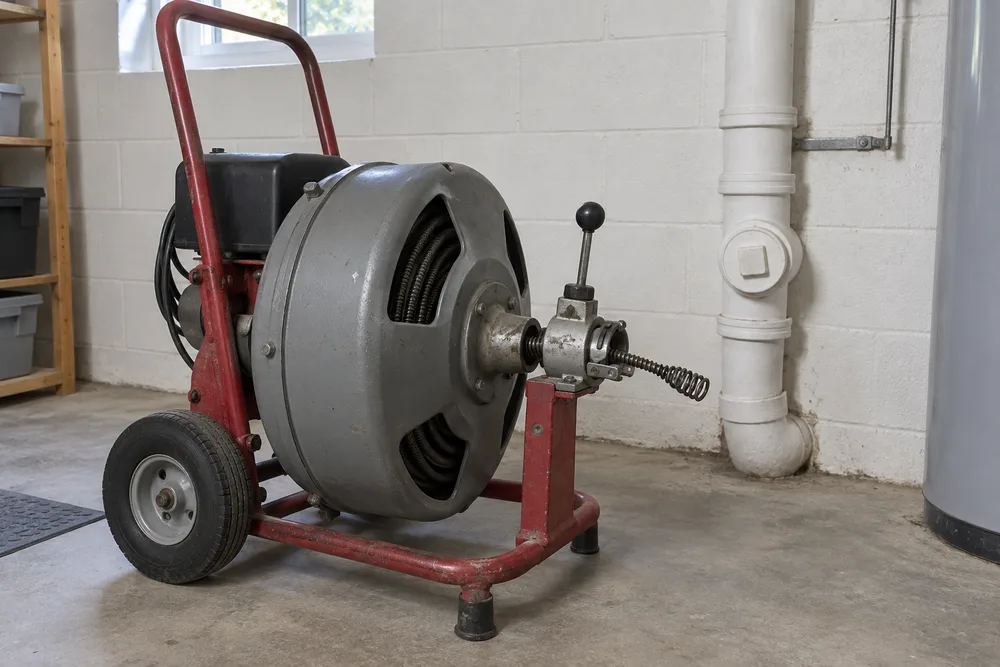
Main sewer rodding is a mechanical cleaning method for a blocked sewer line. It can restore flow when the issue is debris, grease, or another obstruction that a cable can break through or pull back.
The goal is to restore flow first, then decide whether the line needs inspection, jetting, or a different fix. In Matteson, that decision should be based on what the line does after the blockage is cleared, not on a guess before anyone has seen the pipe.
If you want help setting that in motion, you can start with the referral process, or go straight to urgent help if sewage is actively coming up inside the home.
What sewer rodding does in a Matteson home
Sewer rodding uses a flexible cable with a cutting or clearing head to work through the main line. It is aimed at restoring passage through the pipe, not at replacing damaged pipe or solving every repeat backup on its own. That makes it useful when the blockage is local and mechanical access is possible.
A contractor will usually ask where the symptoms showed up, how many fixtures were involved, and whether the problem started suddenly or has been building. Those details matter because a main line problem can look different from a single fixture clog, even when both are annoying.
For homeowners, the practical part is simple. Keep toilets, sinks, laundry, and tubs unused until the line is evaluated, especially if sewage has already surfaced. That prevents more wastewater from loading the same blocked pipe.
- Best suited for a main line that is blocked but still physically accessible.
- Often used after symptoms point beyond a single sink, toilet, or tub.
- Can clear soft buildup, small obstructions, and some root intrusion.
- May be followed by inspection if the cause is unclear or the backup returns.
What a contractor usually wants to know first
Expect questions about which fixtures backed up, whether there is a cleanout, and whether anything unusual was flushed or washed down the drain. Those details help narrow the work order before anyone starts cleaning.
If the home has a sump pump or another pump nearby, it helps to know what it carries. Matteson’s code separates stormwater or groundwater pumps from sanitary wastewater pumps, so an uncertain line should be identified before anyone assumes it belongs in the sewer system.
What happens before, during, and after the service call
Before the visit, the referral intake usually focuses on the symptom pattern and the access points available at the property. The responding contractor then decides whether rodding is the right first move, whether another method would fit better, or whether the line needs inspection first. One missing piece of evidence can change that recommendation. For example, if the backup affects more than one plumbing fixture, that points in a different direction than a slow kitchen sink alone.
During the work, the contractor will use the available opening and work the cable through the line until the obstruction breaks up or flow returns. If the line clears quickly, that is useful information. If the cable hits repeated resistance, or if flow returns only briefly, that usually means the next decision is not just 'clean it again' but 'figure out why it is reoccurring.'
After the line opens, the useful question is not only whether water drains. It is whether the flow stays open under normal use, whether there is visible debris that suggests a repeat issue, and whether a camera inspection would add clarity. A line that clears once and clogs again soon deserves more than a quick reset.
- Before service: describe symptoms clearly and stop running water if sewage is backing up.
- During service: expect mechanical clearing through an existing access point.
- After service: ask whether a camera inspection would help explain a repeat blockage.
- If the problem returns, the cause may be buildup, roots, or a pipe condition issue.
How this can play out
For example, suppose the basement floor drain backs up after several fixtures are used, but the line opens after rodding and drainage returns. That outcome suggests the immediate blockage was cleared, yet it does not prove the pipe is problem-free. If the same symptoms come back a few days later, the next conversation should shift toward inspection or a different cleaning approach rather than treating it as the same easy clog.
Water backing up now?
Pause water use and call. Emergency calls are accepted 24/7.
How to decide between rodding, inspection, or jetting
The choice depends on what is known before the visit and what becomes clear once the line is opened. Rodding is often the starting point when the goal is to get flow back quickly. Inspection is more useful when you need to understand why the blockage happened, especially if it keeps returning. Jetting may fit when heavy buildup needs a more thorough washout and the pipe condition supports that approach.
If the line is only slow at one fixture, a fixture drain may be the better match. If several drains act up together, the main line deserves more attention. You can compare those symptom patterns with the fixture or main sewer guide before choosing the next step.
If the main line seems to clear but the home still smells like sewer gas, or a trap seems to be losing water, that points to a different question than a pure blockage. In that case, the best next move may be a camera look or a separate diagnostic conversation instead of repeated mechanical clearing.
- Choose rodding for a blockage that needs opening now.
- Choose inspection when you need to see what is causing the repeat problem.
- Choose jetting when buildup is heavy and the pipe condition makes that method reasonable.
- Choose a fixture-specific service when only one drain is affected.
How the evidence changes the recommendation
A single blocked toilet can point to a local fixture issue, while multiple slow drains often suggest a shared line problem. If a camera sees roots or a defect, repeated rodding alone may not solve the pattern. If the line is full of soft buildup, a stronger cleaning method may be more efficient. The useful decision is built from the symptom pattern, the access available, and what the line does after it opens.
Why Matteson pump and connection details matter
Matteson distinguishes pumps that carry groundwater or stormwater from pumps that carry sanitary wastewater, and each is meant to serve its own function. That matters when a basement or utility area has more than one discharge line nearby. If a connection is uncertain, a professional should identify it rather than guessing.
That local rule does not mean every backup is caused by a bad connection, and it does not turn every sewer problem into a code issue. It does mean that rerouting a pump line on your own is the wrong move when you are not sure what it carries. A contractor can trace the line, identify the function, and keep the work focused on the actual blockage or discharge path.
If the only symptom is a sewer backup, the priority stays on the sewer line. If there is also a question about where a pump drains, the plumbing layout should be sorted before changes are made.
- Stormwater and sanitary wastewater are treated as separate functions in the code.
- An uncertain pump or drain connection should be identified professionally.
- Do not rework a line on guesswork when the function is unclear.
When this comes up in real homes
This usually matters when a homeowner sees a pump, a floor drain, and a sewer line all in the same area and cannot tell how they relate. A quick visual guess can be wrong. The safer path is to have the line traced or checked as part of the service conversation, then keep the sewer work separate from any stormwater or sump questions.
Questions that help you get the right kind of sewer service
A few direct questions make the call more useful. Ask whether the symptoms sound like a main line issue, whether access is likely from an existing cleanout, and whether the line should be inspected after cleaning. The point is not to overcomplicate the call. The point is to make sure the contractor has enough information to choose the right next action.
If the problem is active right now, describe what is backing up and where. If the issue is recurring, say how quickly it returned after the last clearing. If you know there is a sump pump or stormwater line nearby, mention that too. That helps keep the conversation grounded in the actual plumbing layout instead of assumptions.
Once the line is opened, do not let the conversation stop at 'it drains now.' Ask what caused the blockage pattern, what follow-up makes sense, and what symptom would mean the issue is bigger than a one-time clog. That is how a quick fix turns into a sensible plan.
- What fixture or drain showed the first symptom?
- Is there an existing cleanout or other access point?
- Should the line be camera-inspected after cleaning?
- Does the layout include any sump or stormwater discharge lines nearby?
When to stop using water
If wastewater is coming up through a drain, toilet, or floor drain, stop running water right away and avoid laundry, dishwashing, and long showers until help arrives. That reduces the amount of sewage in the line and keeps the problem from spreading to other fixtures.
Common service choices for a blocked sewer line
| Situation | What it usually means | Common next step |
|---|---|---|
| One sink or tub is slow | Likely a fixture-level clog | Fixture drain cleaning |
| Several drains act up together | Possible main line issue | Main sewer rodding or inspection |
| Line clears, then clogs again | Possible roots, buildup, or pipe issue | Camera inspection or stronger cleaning |
| Sewage is backing up now | Active sewer problem | Pause water use and request urgent help |
Questions homeowners ask
Is sewer rodding the same as snaking?
People often use those words interchangeably for mechanical clearing. What matters is whether the cable and head can reach the blockage and restore flow in the line that is affected.
Does a clear line mean the problem is gone?
Not always. If the line opens but the same backup returns soon, the blockage may be recurring or the pipe may need inspection to see what keeps causing it.
Can rodding fix root intrusion?
It can clear roots enough to restore flow, but that does not mean the roots will not return. If roots are part of the pattern, a follow-up plan may be needed.
Should I keep using sinks and toilets while waiting?
No if wastewater is backing up. Stop running water, and do not try to recreate the problem by flushing or draining fixtures.
What if I am not sure whether the issue is in the main line or a fixture drain?
Describe which fixtures are involved and whether more than one drain is affected. That symptom pattern helps separate a local clog from a shared-line problem.
Local resources
Use these official resources for municipal or utility information. They are separate from Plumbers 911.